
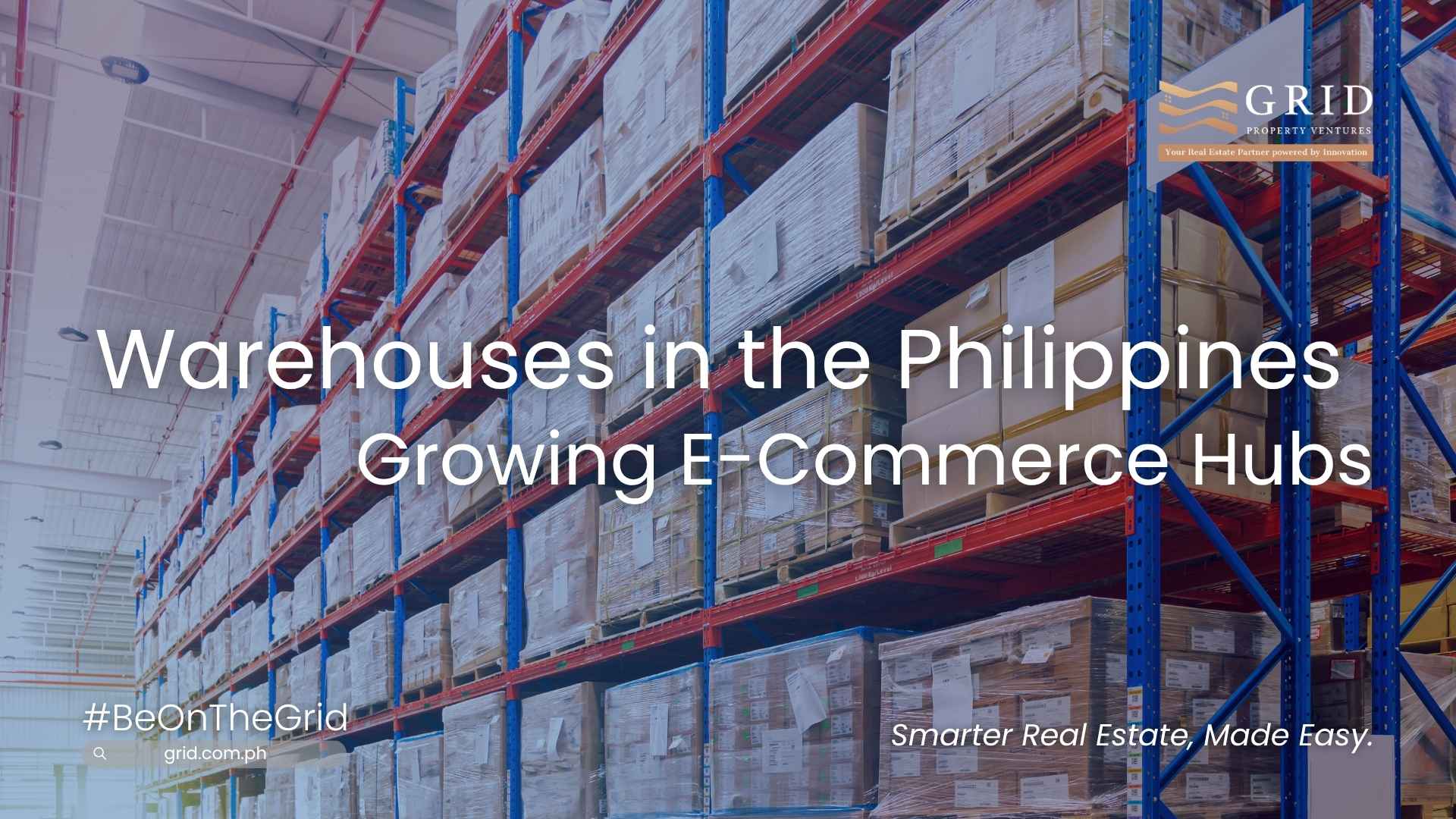
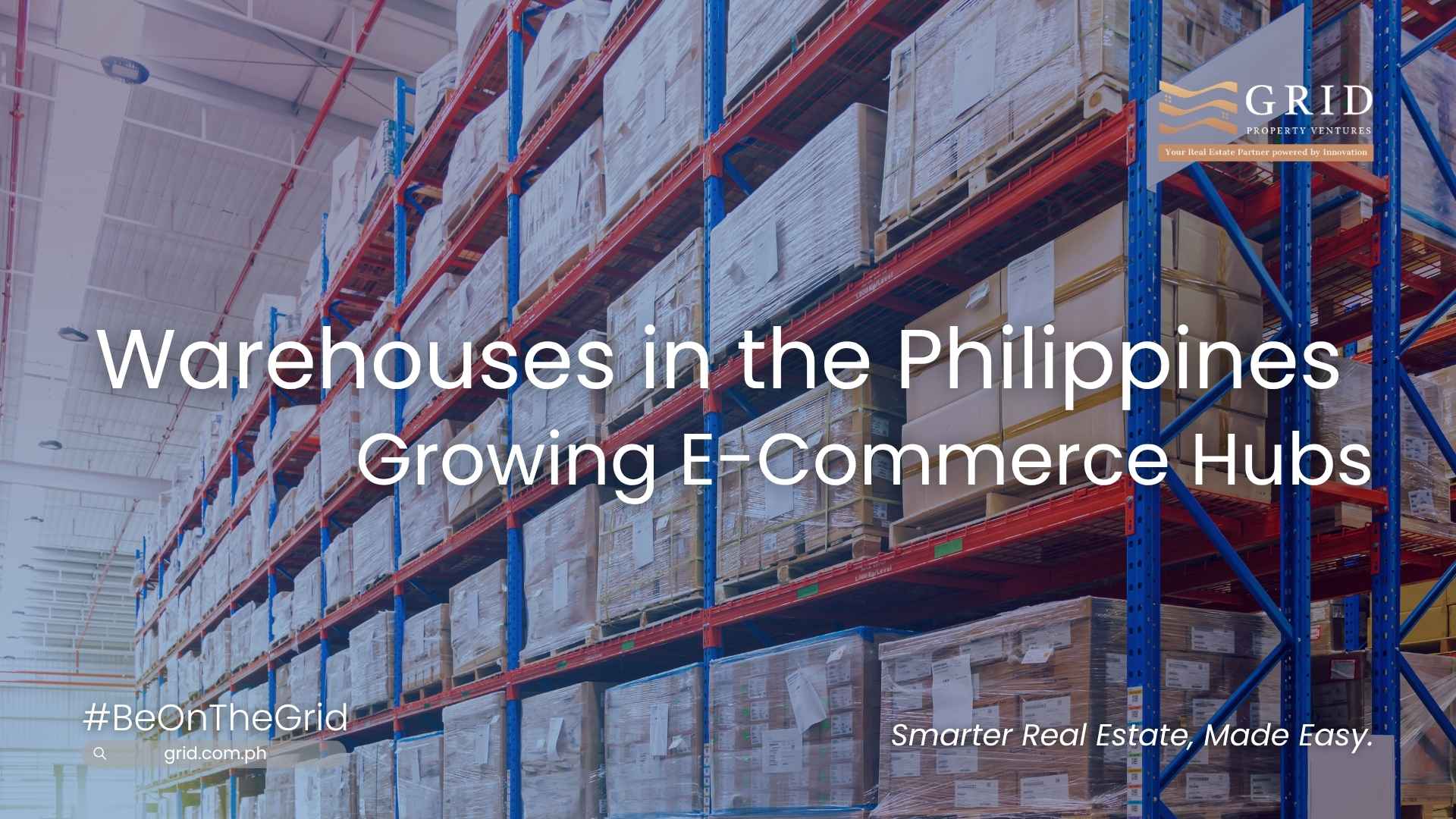
Warehouses in the Philippines: Growing E-Commerce Hubs
While commentary on Philippine property has focused on empty condominiums and soft office markets, a different picture has been forming in industrial real estate. Warehouse vacancy in Metro Cebu has been running near 1.05 percent, and cold storage near 2 percent. Those are not the numbers of a market with spare capacity.
The driver is online retail and the logistics network required to serve it. This article sets out how e-commerce is reshaping demand for Philippine industrial space, which facility types are most constrained, where the geography is concentrating, and what it means for occupiers, developers, and investors.
Why Online Retail Consumes So Much Space
The relationship between e-commerce growth and warehouse demand is not proportional. It is multiplied, and understanding why explains the scale of what is happening.
A traditional retail model moves goods in pallets to a limited number of stores. A distribution center handles bulk, ships full loads, and the customer performs the final leg by traveling to the store.
An e-commerce model moves goods in individual units to individual addresses. Every order requires picking, packing, labeling, and dispatch. That work needs floor area, staff, and equipment that a bulk distribution operation does not.
Returns compound the requirement. Online retail generates return rates that physical retail does not, and processing returns needs its own dedicated space, inspection area, and restocking workflow.
Inventory sits closer to the customer. Delivery expectations have compressed from a week to a few days and, in dense urban areas, to same day. Meeting that requires holding stock in multiple locations near demand rather than centrally, which multiplies the number of facilities even where total inventory is unchanged.
The Facility Types Under Most Pressure
Demand is not uniform across industrial property, and four categories are absorbing space faster than supply is delivering it.
Last mile distribution hubs sit closest to the customer and are the hardest to develop. They need to be inside or immediately adjacent to dense urban areas, which is exactly where industrial land is scarcest and most expensive. In Metro Manila, the competition for these sites is against residential and commercial uses that can pay more per square meter, which is why supply lags demand persistently.
Cold storage is the most constrained segment in the country, with vacancy in Cebu reported near 2 percent. Online grocery, meal kits, pharmaceutical distribution, and food service delivery all require temperature controlled space. Cold storage is capital intensive to build, requires reliable power, and cannot be improvised from ordinary warehouse stock, which is why supply responds slowly to demand.
Modern fulfillment centers need specifications that older Philippine warehouse stock frequently does not offer. Clear heights sufficient for multi level racking, wide column spacing, adequate dock doors and turning circles, floor loading capacity for automated equipment, and power provision for sortation systems. A large proportion of existing Philippine warehouse inventory was built for storage rather than for throughput, and cannot be retrofitted economically.
Sortation and parcel facilities serve the courier networks that carry the final delivery. These have their own requirements around vehicle circulation, loading configuration, and around the clock operation.
Where the Geography Is Concentrating
Industrial demand follows a specific logic in the Philippines, shaped by ports, expressways, and population density.
The Cavite and Laguna corridor remains the primary industrial belt serving Metro Manila, with established estates, expressway access, and a deep labor pool. Proximity to the capital's consumer base is what sustains it.
Bulacan and the northern corridor are drawing increasing interest, supported by the new airport development and the expressway connector programs. For distribution serving both Metro Manila and Central Luzon, the northern position has become considerably more attractive than it was five years ago.
Cebu is the tightest market in the country. Beyond the 1.05 percent warehouse vacancy figure, newer development is opening locations in Balamban, Danao, and Naga as the established areas fill. Cebu serves as the distribution hub for the entire Visayas, which concentrates regional demand into a single constrained market.
Batangas and the southern port corridor benefit from port access and expressway connectivity, particularly for operations combining import handling with domestic distribution.
Davao anchors Mindanao distribution, and the same constraint visible in its office market applies to industrial space: demand has been growing faster than new supply has been delivered.
What Occupiers Should Know
For a business seeking warehouse capacity, the current market requires different behavior than a tenant would use in the office market.
Plan considerably further ahead. In a market with vacancy near 1 percent, waiting for suitable space to become available is not a viable strategy. Occupiers with meaningful requirements should be engaging with developers about facilities under construction, or considering build to suit arrangements, rather than searching existing inventory.
Specify before you search. Clear height, column spacing, floor loading, dock door count and configuration, power capacity, and vehicle turning circles determine whether a facility can actually run your operation. A warehouse that is the right size and the wrong specification is not a compromise, it is a different building.
Understand the charge structure. Industrial estates typically levy estate dues or association dues covering perimeter security, internal roads, drainage, common lighting, and administration. These are generally lower per square meter than office common area charges but should be established before comparing facilities on rent alone.
Check PEZA status if it applies to you. Locators inside registered economic zones can access incentives including income tax holidays, value added tax zero rating on qualifying local purchases, and duty free importation of capital equipment. Incentives attach to registered activities at registered locations, so both the activity and the specific site must qualify.
Expect longer lease terms and less flexibility on rate. In a constrained market, landlords have limited reason to concede, and the negotiating room that exists in Metro Manila offices does not exist here.
Industrial and logistics is currently the strongest Philippine commercial segment on fundamentals, and the reasons are structural rather than cyclical.
Net yields are frequently better than office or residential, partly because operating costs are more often passed to the tenant. Triple net structures, where the tenant assumes real property tax, insurance, and maintenance in addition to rent, are considerably more common in single tenant industrial assets than in multi tenant offices.
Buildings are simpler and cheaper per square meter to construct than office towers, with lower ongoing management intensity.
Tenant covenants can be strong, particularly where the occupier is a major retailer, third party logistics provider, or manufacturer with a long term commitment to the location.
Several cautions belong alongside that.
Specification obsolescence is a real risk. A facility built to today's standard may not suit an automated operation in ten years. Clear height, floor loading, and power capacity are expensive to retrofit and should be specified generously at construction.
Single tenant assets carry binary vacancy. A multi tenant office building at 80 percent occupancy still generates income. A single tenant warehouse is either fully let or entirely empty, and re-letting a purpose built facility takes longer than re-letting a generic floor.
Land cost near urban centers is the constraint on last mile development, and it is what limits how quickly supply can respond to the segment with the most acute shortage.
Power reliability is a genuine due diligence item, particularly for cold storage where a supply interruption destroys inventory rather than merely inconveniencing operations.
How Industrial Leases Differ From Office Leases
Occupiers moving from office space to industrial space frequently assume the lease will work the same way. It does not, and the differences favor the informed tenant.
Terms are longer. Where a Metro Manila office lease commonly runs three to five years, industrial and warehouse leases are frequently written for five to ten, particularly where the facility has been configured for a specific operation. A longer commitment is also more negotiating leverage, and it should be used at the outset rather than accepted passively.
Triple net structures are common. In a triple net lease the tenant assumes real property tax, building insurance, and maintenance in addition to base rent. The base rent is correspondingly lower, which means comparing an industrial triple net quotation directly against an office gross quotation will always mislead. Build a total occupancy cost model across the full term and compare the totals.
Fit-out is measured differently. Racking, mezzanines, dock levelers, and temperature control equipment are substantial capital items, and whether they belong to the landlord or the tenant determines who funds them and what happens at expiry. Establish the restoration obligation before signing, because removing installed racking from a facility at the end of a ten year term is a real cost.
Escalation still applies. Annual escalation of approximately five percent is the market convention across Philippine commercial property, though industrial leases sometimes provide for review at two or three year intervals rather than annually. Confirm which applies and whether it attaches to estate dues as well as rent.
How This Fits the Wider Market
The divergence across Philippine property in 2026 is unusually wide, and industrial sits at the favorable end of it.
Metro Manila condominium vacancy is forecast near 25.6 percent. Metro Manila office vacancy has been running near 19 percent. Cebu warehouse vacancy is near 1.05 percent. Those three numbers describe three different markets operating in the same country at the same time.
A single national assumption about Philippine property will be wrong somewhere, and for investors that divergence is the opportunity rather than a complication. Capital that would have gone into metro condominiums a few years ago has a materially better home in logistics today, and the fundamentals supporting that are demand driven rather than sentiment driven.
What to Watch

- New supply completions against take up. Vacancy this tight invites development, and the constraint could ease quickly if delivery accelerates.
- Consumer spending patterns. E-commerce demand ultimately follows household consumption, which is sensitive to inflation and to borrowing costs.
- Infrastructure completion dates. New expressway and airport capacity changes which locations can serve which markets, and it does so on the day the road opens.
- Cold storage delivery specifically, since it is the most constrained segment and the one where a single large completion moves the market.
Industrial and logistics requirements are decided on specification and location rather than on rate alone, which makes filtering on building attributes the fastest way to a viable shortlist. You can explore warehouse, cold storage, and industrial property across Metro Manila, Cebu, and the country's key corridors at The Grid Property Ventures, the Philippines' smartest real estate platform.